 LIVE CHAT
 Sales / Scratch & Dent

Adapting the
Turbo Hydramatic 350
to the
Jeep Dana Model 300 Transfer Case - short version

133-S Product
Our TH350 to Dana 300 conversion makes for a very strong, and capable assembly both on-road and off-road. It is one of the more popular automatic transmission conversions into Jeeps, providing a very compact geartrain and compatibility with a variety of engines. This installation is particularly useful on shorter Jeeps such as the CJ5 and any application where rear drive shaft length is critical. Often in these shorter Jeeps, the TH350 is the only reasonable choice.
Product & Features
**Please read Clocking Information & Driveshaft / Yoke to Pan Clearance below before ordering.
The Adapter
The Novak TH350 to Jeep Model 300 - short version transfer case adapter is very compact at only 1.1" long for a combined transmission and adapter length of 22.8". The adapter itself is machined from 6061 T6 aluminum billet, featuring thick flanges, a heavy cross-section and superior strength.
Advanced computer modeling methods were integral to the design of our #133 adapter assembly. We were able
to push the bounds of product and process well beyond the status quo.
Contents
Billet adapter housing, transfer case input or output shaft (per kit selected), transfer case input shaft seal, transfer case to adapter gasket, transmission to adapter sealing ring, fastening hardware, steel mounting base and instructions. >
Applications & Compatibility
Transmissions
All versions and years of the TH350 can be adapted to the Dana 300. Chevrolet, Buick/Oldsmobile/Pontiac and Unicase versions all work equally well with the correct adapter option.
Option I: Transfer Case Input Shaft Version

The 4wd version of the TH350 will have a ~3/4" output shaft stickout length.
4wd versions of the Turbo 350 are ready to bolt up to our 133 adapter assembly. Disassembly of the transmission is unnecessary as the 27 spline 4wd style output shaft which protrudes 3/4" from the rear face of the TH350 transmission main case is correct for this kit version. Partial disassembly of the transfer case is necessary to install a new matching 27 spline stock length Dana 300 input shaft machined from triple-alloy gear steel which provides a superior upgrade.
The input shaft installation is a 1-2 hour bench job and usually includes either a simple gasket and seal replacement or preferably a full rebuild of a tired D300. It is not requisite that you rebuild your Dana 300 to successfully complete the conversion. However, it is certainly worth consideration especially if your transfer case leaks or has many years of service. Our superior quality Dana 300 gaskets & seals kits and our all inclusive master rebuild kits with stronger Novak manufactured center pin are highly recommended for this purpose.
Option II: Transmission Output Shaft Version
The 133-S adapter is compatible with all versions of the TH350. If you have a 2wd TH350, a 4wd TH350 that is undergoing a rebuild anyway, your D300 was just rebuilt (doesn’t leak) and you’d rather not open it back up, are unsure what TH350 you have (or will have at the time of the conversion) the 133-S kit is your best choice. The new 23 spline TH350 output shaft is machined from E4340 (similar to 300M) alloy steel which provides a substantial strength upgrade. The new Novak shaft splines directly into the OEM style input shaft of a 300 transfer case. This requires disassembly of the transmission, and we recommend the services of a transmission professional. The basic installation is a 1.5-2 hour bench job and will include at least simple gasket and seal replacements. This is a good time for a more thorough master rebuild and update of the Hydra-Matic. Many consider one of our complete Novak re-manufactured and upgraded transmission packages. The advantage of a superior, professionally built transmission, tested and ready to bolt in delivered to you is definitely worthy of consideration.

We have seen a handful of shafts broken like this one, and heard our customers speak of more failures of output shafts made by other adapter companies. This is why we go through the trouble and expense of making our output shafts from a solid bar of exceptionally strong E4340 (similar to 300M) alloy steel, instead of lower grade alloys or friction welding salvage GM shafts. A second, sometimes less obvious but pernicious problem is the issue of warpage during friction welding and heat treating - which cannot be corrected when the shaft journals are already ground and worn at or below factory specifications. Novak shafts receive a final hard turn of bearing journals after the heat treat process with special tooling and cooling process to ensure the ultimate finish. The Novak shaft is produced to factory specifications with stress risers removed using much stronger steel alloy. Our 4-axis CNC cut of the spiral gear, oil feed passages and other features are no small tasks. This attention to detail, maximized strength through design and material along with precise tolerances provide the ultimate parts for your project.
Engines
Any engine that can be made to work with the TH350 will work with this adapter. All of the above mentioned native engines along with others that can be adapted via a front adapter such as our 437 series kits open up numerous possibilities.


Related Products


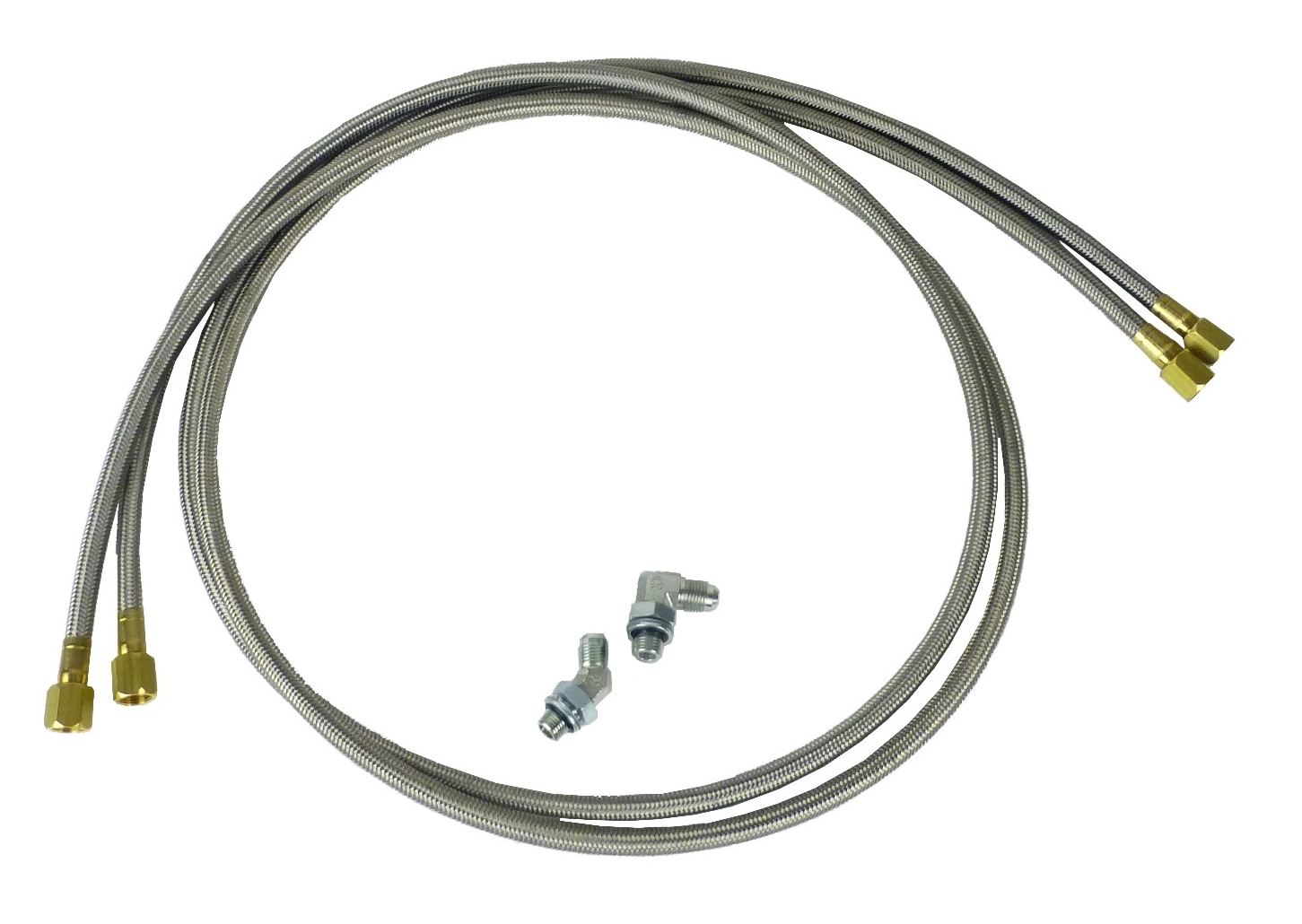
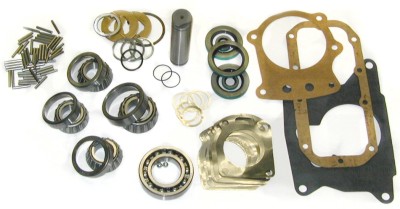


Installation Requirements
Tools
Tools required will vary depending on which kit is selected. The automatic transmission takes more specialized tools, knowledge, gaskets, seals and snap ring pliers, etc. The D300 input will require bearings be pulled and pressed on the input, in addition to typical mechanic's hand tools.
Placement
Transmission placement is largely determined by factory engine location. It is not necessary in typical conversions to change the engine position unless an engine is being swapped in at the same time as will often be the case with these kits. Setting the powertrain to the proper factory or conversion pitch angle - usually tilted down ~5 (3-7 acceptable) degrees - is recommended. Consult our engine conversion guides for more specific recommendations on placement if the engine is being replaced.
Clocking Information & Driveshaft / Yoke to Pan Clearance
Use of the factory size driveshaft and yoke is recommended. Our adapter design has maximized clearance between the transmission pan and yoke, but it is necessary that you install your GM engine offset 1-1/4" to the driver's side. If you are installing against a factory AMC engine with our #437-AMC adapter kit, your factory engine should already have this proper offset.
As a result of the compact nature of the 133 series adapter, front shaft positioning is more critical than that of our longer version and careful selection of size of yoke and diameter of the shaft is necessary. Optimal clocking is provided to facilitate fastener spacing on both the transmission and transfer case. For this reason, the 133 adapter does not offer clocking options. It does give the shortest possible length, correct clocking and maximum rear shaft length so desperately needed in many of these applications.
 Engines & Engine
Mounting
Engines & Engine
Mounting
If converting to a V8 in conjunction with this upgrade, aftermarket engine mounts are available to ease its installation. Because of the broad spectrum of engines and vehicle combinations used with this adapter, it would be difficult to list them all here. Whatever your application, Novak likely has the perfect solution. From a 225 Buick V6 in a CJ2A to an LS3 in your JK we’ve got you covered.
Novak's engine mounts, feature excellent vibration dampening, superior strength, and impressive adjustability - adjustable even after the engine is installed. The design, strength, and affordability of our mounts are second to none.
Engine placement in these applications is an effort in compromise to find the best position overall as a package. Generally the engine will be about 1" or more towards the left, (driver’s side in the USA) away from the front differential in a CJ application. This gives the best balance of weight and more importantly clearance for the driveshaft going to the front axle. your tight spots will be steering to exhaust on the left (hold that as tight as you can) and clearance for the front driveshaft on the right. Fore and aft position will vary with the Jeep model and engine. Have a CJ5 and Gen I with a rear distributor? you’ll be better off a little forward for more rear driveshaft length and clearance for that HEI. If you are in a longer Jeep and using an LS engine with no distributor, you’ll have more fan clearance and better balance if you hold it to the rear. Usually for ground clearance tuck things up nicely for height to avoid damage to oil pans and other life giving parts in the Jeep. Common sense and taking a step back to look at things overall goes a long way.
Driveshafts
Driveshaft length changes are often required. Most conversions to these transmissions will require that the rear driveshaft be modified to be shorter and front driveshaft longer.
Some installers, concerned about the expense of new or modified driveshafts, attempt to let the existing driveshafts dictate engine, transmission and transfer case location, often to the detriment of the project. Our recommendation is to prioritize the correct position of drivetrain components over saving a few dollars which is usually regretted in the long run with compromised positioning.
Driveshaft modifications and rebalancing can be affordable when performed by driveline, RV or tractor implement specialists. New driveshafts are an option, but not necessarily a requirement in regards to the actual successful conversion if your existing driveshafts are in good condition.
Jeeps that require extensive travel or specialty-built driveshafts have this option available through several fabricators across the nation. These are normally specified after placement of the new transmission and measured at vehicle ride height. As the rear driveline gets shorter, it is often advantageous to us a Double Cardan or "CV style" rear shaft with the correct geometry at the axle to minimize vibrations and possible binding.
Axles
Use of factory axles is completely acceptable with this conversion. Axle upgrades are not necessary, but they may be chosen for reasons external to this transmission upgrade.
Also See
- Adapting the Turbo Hydramatic 350 to the Jeep Dana Model 300 Transfer Case
- Adapting AMC I6 & V8 Engines to the Chevrolet / GM Hydramatic Transmissions
- Complete TH350 Transmission Package
- Parts for the Dana Model 300 Transfer Case
- Dana 300 Transfer Case Twin-Stick Shifter Kit
- Dana 300 Ultra-Short HD Rear Output Assembly
- The Novak Guide to the GM TH350 Automatic Transmission
- The Novak Guide to the Dana Spicer Model 300 Transfer Case